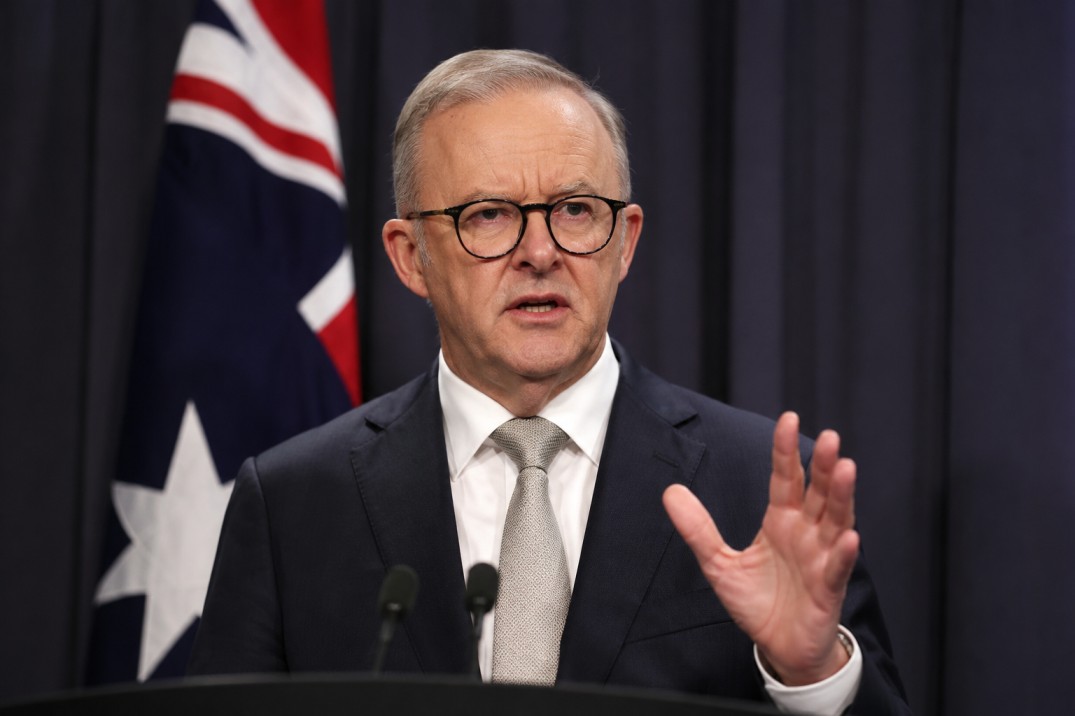
Australian Prime Minister Anthony Albanese has delivered a stern rebuke to China following its test of a nuclear-capable intercontinental ballistic missile (ICBM) over the Pacific Ocean, emphasizing the threat such actions pose to regional peace and stability. The missile, launched from a nuclear-powered submarine with a dummy warhead, was criticized by Albanese for its potential devastating impact if equipped with a nuclear payload. He underscored the importance of reducing nuclear armaments in the region and affirmed Australia’s commitment to voicing its concerns to Beijing.
On a visit to the Solomon Islands, Albanese described the missile test as a provocative act that risks increasing instability throughout the Pacific. His concerns were echoed by Solomon Islands Prime Minister Matthew Wale, who condemned the launch and called on major powers, including China and the United States, to refrain from conducting missile tests in the Pacific. Wale emphasized the importance of building partnerships with Pacific nations over creating security threats.
China, in response, defended the missile launch as part of a routine military exercise, asserting it was conducted in accordance with international law. Beijing claimed that neighboring countries were notified in advance and maintained that the test was not directed at any specific nation. However, Australian officials disputed this explanation, stating that the notice provided was inadequate and that the test did not align with internationally accepted standards for ballistic missile notifications.
The missile launch has sparked criticism from multiple countries, fueling concerns about the rising military activities in the Indo-Pacific region. These developments have heightened fears of increased regional tensions and the potential onset of a new phase of strategic competition.