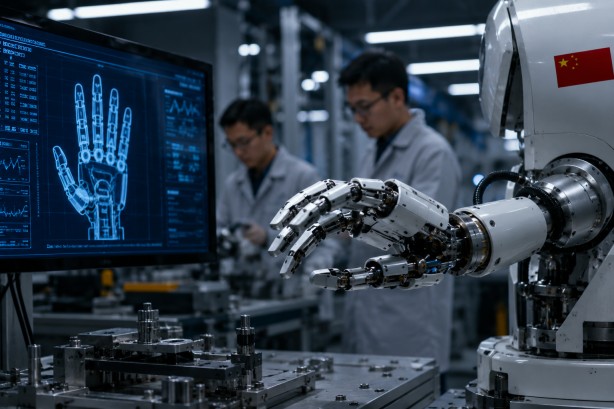
Chinese robotics firms are ramping up their efforts to create highly dexterous robotic hands, a technological feat considered one of the most daunting in the development of humanoid robots. Leveraging the nation’s robust manufacturing prowess, startups in China are blending artificial intelligence with cutting-edge engineering to develop robotic hands that can execute intricate tasks like grasping objects, using tools, and performing daily activities. This advancement is anticipated to play a pivotal role in the practical deployment of humanoid robots in homes, healthcare settings, and various industries.
Experts in the field emphasize that mimicking the flexibility and precision of the human hand presents a far greater challenge than constructing other parts of a humanoid robot. Innovators must address both hardware challenges, such as designing compact motors and sensors, and software challenges that allow robots to process sensations like touch, pressure, and complex movements.
China is positioning itself as a global leader in robotics manufacturing, thanks to its sophisticated supply chain and a government-backed initiative focused on “embodied AI.” This burgeoning robotics ecosystem is spurring rapid innovation, with companies dedicated to developing robotic hands, wearable sensor gloves, and artificial intelligence systems that learn human movements through data collected from real-world interactions.
Researchers assert that enhancing the dexterity of robotic hands marks a significant step towards enabling robots to perform a diverse array of everyday tasks. These range from household chores to industrial work and advanced prosthetic applications. Such advancements could eventually lead to humanoid robots operating more seamlessly alongside humans, thereby unlocking new opportunities in manufacturing, healthcare, and consumer service sectors.
Industry leaders are optimistic that as progress continues in AI and robotics, humanoid robots may one day function naturally in human environments, providing unprecedented assistance and capabilities in various aspects of life and work.