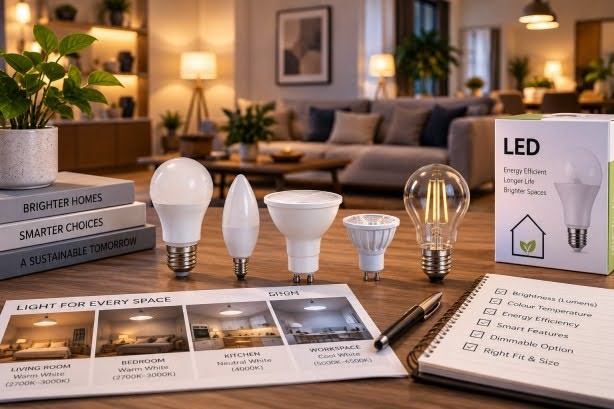
LED bulbs continue to be a preferred option for lighting in homes and offices, thanks to their energy efficiency and longevity. As manufacturers broaden their offerings, consumers are presented with a greater variety of choices in terms of brightness, color temperature, bulb shape, connectivity, and efficiency. However, choosing the right LED bulb involves more than just looking at price or brand; it depends on factors such as the room’s function, the fixture, desired brightness, and the type of lighting needed.
When selecting an LED bulb, consider brightness measured in lumens, rather than wattage, which was the traditional measure of brightness for older bulb types. For general-purpose uses, a bulb with an output of 800 to 1,000 lumens is typically adequate, though the ideal brightness can vary based on room size and lighting needs, such as ambient, task, or accent lighting. It’s also important to ensure the bulb is compatible with the fixture and doesn’t exceed the maximum rated wattage.
Color temperature, expressed in Kelvin (K), affects whether an LED bulb emits warm or cool light. Bulbs within the 2700K–3000K range offer a warm glow suitable for bedrooms and living rooms, while cooler options in the 4000K–5000K range may be better for kitchens and workspaces, where clear task lighting is essential. Using different temperatures in different areas of the home can create the desired ambiance and functionality, such as warm lighting in living areas and cooler lighting at work desks.
Energy efficiency is a key reason for switching from incandescent bulbs to LEDs, as they typically use much less electricity while providing similar illumination levels and producing less heat. However, actual savings depend on factors like wattage, daily usage, electricity costs, and the technology being replaced. Additionally, while LED bulbs generally last longer than incandescent ones, lifespan can vary based on heat management, usage patterns, and build quality. It’s advisable to check the manufacturer’s rated lifespan and ensure the bulb is suitable for enclosed fixtures if needed.
Beyond efficiency, light quality is crucial, especially in spaces where people spend extended periods, like bedrooms or offices. Specifications such as color rendering and flicker performance can help assess comfort and suitability. For those interested in connected lighting, smart LED bulbs offer features like Wi-Fi, Bluetooth, and app control, though they come at a higher price. Ultimately, selecting the right LED bulb involves examining technical specifications, including lumen output, color temperature, and fixture compatibility, to ensure the bulb provides the intended brightness, appearance, and efficiency without unnecessary features or costs.
Legal Disclaimer: The information contained in this article has been provided by independent third-party contributors, clients, or content partners. We do not independently verify the accuracy, completeness, legality, ownership, licensing, or reliability of submitted content, including text, images, videos, trademarks, or other media materials. The submitting party is solely responsible for ensuring that all content, including images and media assets, complies with applicable copyright, trademark, licensing, and intellectual property laws. We disclaim liability for any unauthorized use of copyrighted or proprietary materials by third parties. If you believe that any content published on this platform infringes your intellectual property rights, kindly contact the author above for prompt review and resolution.