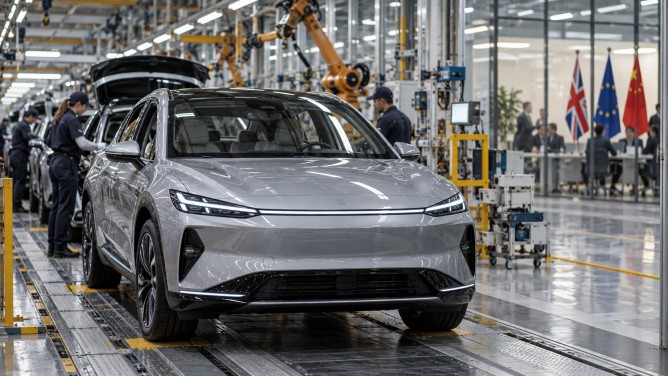
The United Kingdom is weighing the possibility of imposing tariffs on Chinese-manufactured electric vehicles as it seeks to align with the European Union’s “Made in Europe” industrial strategy. This move could see the UK adopting similar trade defence measures as the EU, which plans to introduce tariffs on Chinese electric vehicles in 2024. The initiative, backed by France and Germany, aims to bolster European manufacturing by prioritizing locally produced goods and addressing challenges posed by subsidized imports.
British officials have indicated that discussions regarding the UK’s participation in the EU’s Industrial Accelerator Act are still in the early stages, emphasizing that any final agreement will respect the UK’s independent trade policy. However, the potential adoption of tariffs has already sparked criticism from China, which views such measures as discriminatory and contrary to international trade principles. Beijing has conveyed its concerns to the UK, cautioning against possible restrictions on Chinese products.
The debate unfolds amid a significant expansion of Chinese electric vehicle manufacturers in the UK market. British policymakers are wary that missing out on the EU initiative could weaken domestic automotive supply chains and jeopardize billions of pounds in trade. Joining the scheme could help British manufacturers remain competitive against lower-cost imports while ensuring continued access to European supply chains.
However, the introduction of tariffs could lead to higher vehicle prices for UK consumers and provoke retaliatory actions from China, potentially impacting British carmakers that export to the Chinese market. The UK automotive industry is heavily export-oriented, with about 80% of domestically produced cars sold overseas. The European Union is a critical market for these exports, accounting for more than half of them, highlighting the importance of maintaining strong trade ties with the bloc.
The EU is expected to move forward with the Industrial Accelerator Act by the end of 2026 or early 2027. As negotiations over the UK’s participation continue, the outcome will likely shape future UK-EU industrial relations and influence trade dynamics with China. British officials remain engaged in discussions to establish terms that balance the country’s trade interests while exploring opportunities within the EU’s framework.