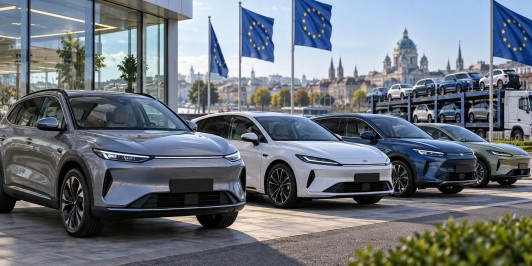
The surge in sales of Chinese-made hybrid cars in the European Union is reshaping the automotive landscape and heightening concerns in Brussels over competitive pressures facing European car manufacturers. As Chinese brands like BYD, Chery, and Leapmotor rapidly increase their market share, European automakers are grappling with the consequences of this influx.
Data reveals that sales of fully hybrid vehicles manufactured in China skyrocketed from a mere 659 in 2022 to an impressive 160,662 units in the first seven months of 2026. Similarly, Chinese-made plug-in hybrid sales surged from 56,706 units in 2022 to 217,764 during the same timeframe this year. This growth trend has intensified since the European Union implemented anti-subsidy tariffs on Chinese electric vehicles in 2024, which did not extend to hybrid models.
In response to these developments, the European Commission has urged China to voluntarily cap its hybrid vehicle exports to the EU. Without a mutual agreement, the bloc might be compelled to consider other protective measures, such as imposing quotas, to safeguard its automotive industry.
Chinese manufacturers are swiftly gaining ground, with Geely emerging as the largest Chinese automotive group within the European market. BYD recorded robust sales of around 177,000 vehicles in the EU, and Geely sold approximately 205,000 vehicles in the first eight months of 2026. Despite these figures, European manufacturers still maintain the largest share of the market.
Currently, hybrid vehicles make up nearly 37% of the European car market, while fully electric vehicles account for just over 21%. The rising tide of Chinese vehicle imports is occurring against a backdrop of the EU’s efforts to rectify its trade imbalance with China and protect the competitiveness of its domestic auto industry.