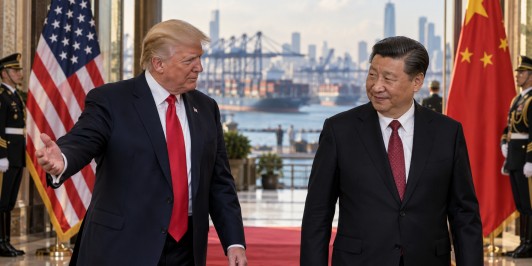
The extension of the Busan agreement between the United States and China is set to provide a temporary reprieve in ongoing trade tensions, maintaining a truce until January 10. This move allows both nations to continue their negotiations without the immediate pressure of escalating trade measures, potentially stabilizing economic relationships amid a backdrop of strategic competition.
The announcement came as Chinese President Xi Jinping commenced a state visit to Washington, welcomed with an unusually grand reception by U.S. President Donald Trump at Joint Base Andrews. The ceremonial greeting included military honors, national flags, and a flyover by two U.S. B-1 bombers, underscoring the significance of the visit.
During this two-day visit, President Xi is set to engage in discussions that extend beyond trade, touching on key topics such as artificial intelligence and technology, areas in which both nations are vying for dominance. The meetings with President Trump and other U.S. officials are expected to explore ways to manage these economic and strategic differences while ensuring ongoing dialogue.
The extension of the trade agreement is a pivotal element of this diplomatic engagement, reflecting an effort to mitigate the economic friction between the world’s two largest economies. U.S. Treasury Secretary Scott Bessent highlighted the importance of this extension, as it temporarily halts further trade-related measures, allowing for continued dialogue.
This state visit marks a crucial moment in U.S.-China relations, as both countries navigate the complexities of their economic ties and geopolitical strategies. With advanced technology sectors, particularly artificial intelligence, at the forefront of this competition, maintaining open communication channels becomes increasingly vital.