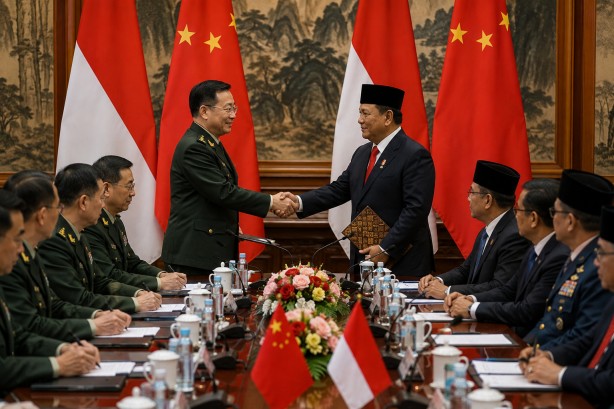
The second iteration of the China-Indonesia Joint Foreign and Defense Ministerial Dialogue, commonly referred to as the 2+2 mechanism, represents a significant advancement in political and security collaboration between the two nations. This dialogue seeks to enhance regular communication and broaden the scope of cooperation across various domains, including defense, technology, maritime security, cybersecurity, and crisis management.
For Indonesia, the partnership with China offers a pathway to modernize its defense capabilities while bolstering its domestic industrial and technological capacity. Discussions between the two countries have explored potential cooperation in defense manufacturing, technology transfer, and the provision of military equipment. By engaging with China, Indonesia aims to diversify its international relations while upholding its strategic autonomy, with an emphasis on developing internal capacities rather than becoming overly reliant on any single foreign entity.
Maritime cooperation stands out as a particularly crucial area of focus, given the ongoing necessity for both countries to navigate differing interests and stances on regional matters. By maintaining regular communication, China and Indonesia hope to minimize misunderstandings and contribute to greater regional stability.
The implications of the China-Indonesia 2+2 mechanism extend beyond bilateral relations, potentially influencing the broader Southeast Asian political, economic, and security landscape. As both nations hold considerable sway in the region, their enhanced cooperation could have significant ripple effects.
The long-term success of this dialogue will largely hinge on the translation of agreements into tangible advancements in defense capabilities, industrial development, maritime coordination, and regional security. Only time will tell if these discussions will yield practical benefits and foster a more stable regional environment.