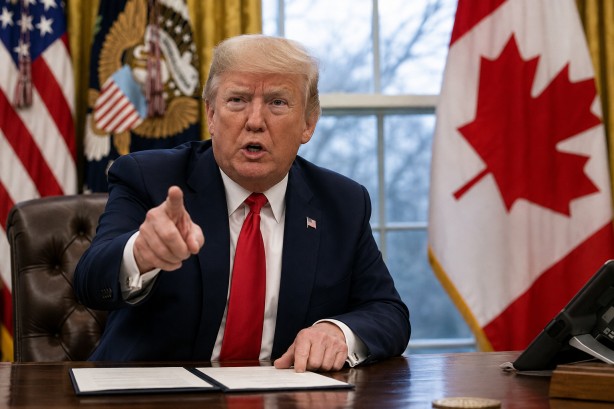
President Donald Trump has launched a strong critique of Canada following the collapse of trade talks between the two nations, intensifying their ongoing trade conflict. The United States has enacted 50% tariffs on approximately $20 billion of Canadian imports, targeting a variety of goods. In retaliation, Canadian Prime Minister Mark Carney has vowed to impose equivalent tariffs, firmly stating that Canada will not comply with the demands set forth by Washington.
Carney has labeled the emerging situation as a trade war, accusing the U.S. of economically targeting Canada. In defense, U.S. Trade Representative Jamieson Greer justified the imposition of tariffs as a necessary measure to safeguard American workers and maintain the integrity of supply chains. This trade-related friction has already sparked concerns among businesses and legislators in both nations.
Canadian business organizations have raised alarms that exporters and small businesses might suffer significant revenue reductions due to the tariffs. Similarly, U.S. lawmakers, especially those from border states, have expressed worry that these tariffs could lead to increased costs for businesses, farmers, and consumers alike.
Canada’s retaliatory tariffs are slated to commence on September 8 and will include products such as steel, dairy items, appliances, and electronics. This tit-for-tat escalation adds layers of uncertainty regarding the future of the US-Mexico-Canada trade agreement, a crucial framework that regulates a substantial portion of trade across North America.